4T4R vs. 8T8R deployment optimization over 5G Network Architecture
Project title: 5G MIMO deployment for RAN Performance Optimization
This project investigates the performance trade-offs between 4T4R and 8T8R MIMO antenna systems for 5G radio access networks, with the objective of developing practical engineering guidelines for mobile network planning and optimization. The study consultancy combines theoretical MIMO capacity analysis with real-world deployment considerations to evaluate how antenna configuration influences coverage, spectral efficiency, user capacity, energy consumption, and overall network performance.
Beyond demonstrating the theoretical advantages of higher-order MIMO, the project examines the practical conditions under which these gains can be fully realized, including channel characteristics, CSI quality, UE capabilities, traffic demand, and hardware implementation.
Particular emphasis is placed on identifying scenarios where a properly engineered 4T4R deployment may provide comparable or even superior operational performance to an 8T8R solution. The outcome of the project is a set of technology selection criteria and deployment recommendations that enable mobile network operators to optimize both network performance and investment efficiency according to specific deployment environments.”
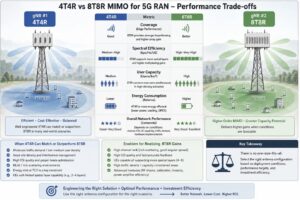
Figure 1. 4T4R vs. 8T8R performance comparison
Key Objectives and Considerations: The project is executed as a collaborative research and engineering initiative between MCNS and Commsquare, combining industrial mobile network operational expertise with advanced 3GPP technical specialization.
The collaboration focuses on translating the latest 3GPP Release 17-19 developments into practical engineering methodologies that can be directly adopted by mobile network operators in sub6Ghz bands. Emphasis is placed on operator-driven enhancements involving:
- AI/ML-assisted RAN optimization and automation.
- Intelligent MIMO deployment strategies.
- Coverage and Capacity Optimization (CCO).
- Energy-efficient RAN operation.
- Customer-specific network optimization methodologies.
- Vendor-independent engineering MIMO deployment best practices aligned with 3GPP specifications.

Figure 2. How antenna ports affect the RAN performance
MCNS contributes operational experience, live network engineering expertise, deployment scenarios, and practical operator requirements for commercial mobile networks in low or sub6GHz bands, reusing LTE technology and infrastructure.
The project aims to produce practical engineering guidelines, optimization methodologies, technical white papers, and customer-oriented best practices that assist mobile network operators in selecting the most appropriate MIMO architecture for different deployment environments while maximizing network performance, energy efficiency, and return on investment.
Project Conclusion
Ultimately, the collaboration serves as a vehicle for accelerating the adoption of 3GPP Release 17-19 customer operator enhancements, enabling operators to make informed technology decisions based not only on theoretical capacity gains but also on real-world deployment efficiency, operational complexity, and long-term network evolution.
References:
[1] https://www.linkedin.com/posts/spyridonlouvros_5g-mimo-8t8r-vs-4t4r-performance-review-ugcPost-7482055972350439424-JKbP/?utm_source=share&utm_medium=member_desktop&rcm=ACoAABIB9dMB88x9exfGQdlsaSxuYK19Uv5WbZ0
(please download the post attached pdf file)
[2] https://www.linkedin.com/feed/update/urn:li:ugcPost:7484148954943844352/?skipRedirect=true
Affiliated companies:
[1] Commsquare: https://www.commsquare.com/
[2]Vivacom: https://www.vivacom.bg/